
Video Title and Thumbnail
It's unfortunate that on YouTube, besides teaching, teachers often have to do additional work to reach their target audience, which may not be directly related to teaching. YouTube is not just an educational platform; it's a video-sharing platform, and if you want to reach your target audience there, you have to adhere to YouTube's rules.
YouTube presents your videos in a condensed form in front of your viewers, known as an impression, and it works somewhat like this.
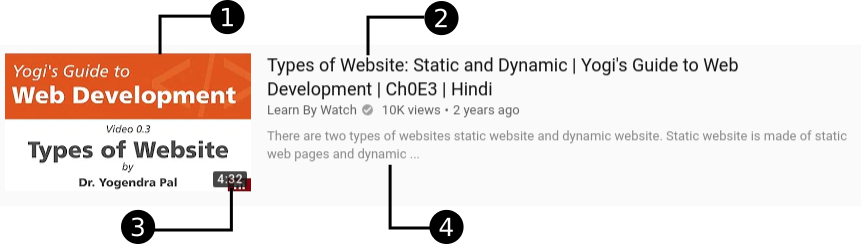
Thumbnail: The thumbnail is the largest element within the impression. If a student looks at this thumbnail and feels that what they are looking for might be in this video, they can click on this impression.
Title: The video's title can be considered the second most crucial element. If a student didn't get impressed by the thumbnail, they will read the title and decide whether they should watch this video or not based on that.
Time: In this video, you can see it's 4 minutes and 22 seconds long. If a student wants to watch a short video on their searched topic, they won't watch this one, and they will look for another video that is a bit shorter.
Description: This is a sentence that provides a bit more information about your video. If a student is not impressed by your thumbnail and title, or if they judge the video's suitability based on its duration, reading the description helps them decide whether they should watch the video or not.
If you want your video to be viewed by students, you need to pay attention to these four things. Keeping these four aspects in mind can increase your video's click-through rate (CTR), and you'll have a better chance of success.
CTR or Click-Through Rate
CTR, which stands for Click-Through Rate, indicates how many times your video was presented to students and how many times students clicked on your video's impression.
If YouTube displayed your video 100 times in search results and recommended video lists, and students clicked on your video's impression 10 times, then your video's CTR would be 10%.
Some teachers believe that their job is to teach, and they have created good content for students, so it's the students' responsibility to watch and learn. This teacher's perspective has its merits, but you should also pay attention to achieving your goals.
What is your goal?
Whether it's earning money through YouTube or simply helping students, your goal will be fulfilled when students watch your videos. YouTube shows your video's impression to students, and afterward, students decide whether they want to watch it or not based on these four things. Until you pay attention to these four things, you won't succeed in achieving your goals.
Answers are generated by AI from this book’s content and may be imperfect — the chapters themselves are the source of truth. This is the same technology behind our AI Teaching Assistant service.